
The Power of Goal Setting: How to Maximize Your Learning

Setting clear goals is essential for success in learning. But have you ever stopped to think about why it is so important and how it can transform your learning process? In this article, we will explore the importance of setting SMART goals (Specific, Measurable, Achievable, Relevant, and Time-bound) and provide you with practical strategies to maximize your potential.
The Importance of Setting Goals

Establishing clear goals not only gives you a direction to follow but also increases your motivation and focus. Why is this so crucial? Because the simple act of defining what you want to achieve allows you to visualize success and provides you with a clear path to follow.
Benefits of Setting Goals
- Increases Motivation: Having clear goals gives you a reason to keep going, especially when facing challenges.
- Improves Focus: Specific goals help you concentrate on what really matters, avoiding unnecessary distractions.
- Facilitates Progress Measurement: Measurable objectives allow you to track your progress and make adjustments when necessary.
- Promotes Self-Efficacy: Achieving your goals gives you a sense of accomplishment, boosting your confidence in your abilities.
How to Set SMART Goals
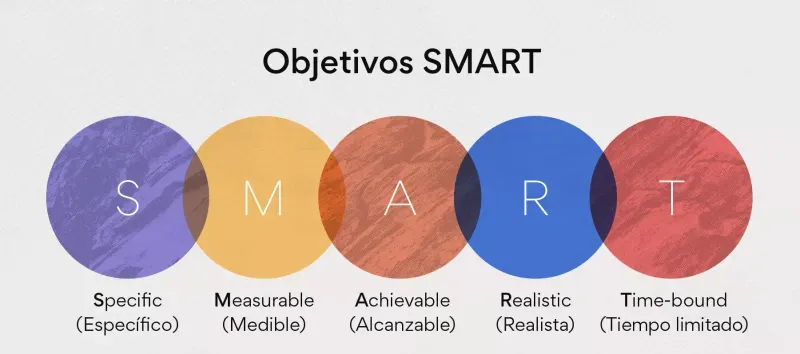
The SMART method is a proven technique for setting effective goals. SMART is an acronym that stands for:
- S: Specific
- M: Measurable
- A: Achievable
- R: Relevant
- T: Time-bound
Example of a SMART Goal
Suppose you want to learn a new programming language, such as Python. Instead of saying "I want to learn Python," a SMART goal would be:
- Specific: "I want to complete an online Python course."
- Measurable: "I want to obtain a certificate upon completing the course."
- Achievable: "I have 5 hours a week to dedicate to the course."
- Relevant: "Learning Python will help me in my career as a software developer."
- Time-bound: "I want to complete the course in 3 months."
Monitoring and Adjusting Your Progress

One of the key aspects of goal setting is the constant monitoring of progress. It is not enough to set a goal; it is also crucial to track your progress and make adjustments as necessary.
Strategies for Monitoring Your Progress
- Learning Journals: Keep a journal where you record your daily achievements and reflections on your progress.
- Periodic Reviews: Schedule specific times to evaluate your progress and adjust your strategies if necessary.
- Constant Feedback: Seek feedback from mentors or peers to gain different perspectives on your performance.

Setting clear goals and monitoring your progress not only helps you learn more effectively but also prepares you for a successful future. As you develop the skill of setting and achieving goals, you will become a more autonomous and effective learner.
Practical Examples
Imagine you are a software developer looking to improve your skills in artificial intelligence (AI). Setting SMART goals will allow you to:
- Identify specific AI courses you can take.
- Measure your progress through practical projects and certifications.
- Ensure that your goals are achievable within your current schedule.
- Maintain relevance by focusing on areas of AI that align with your professional objectives.
- Set deadlines for each stage of your learning.
Conclusion
Setting goals is a crucial component for maximizing your learning. By establishing SMART objectives and monitoring your progress, you can transform your learning process and achieve your goals more efficiently. Do not underestimate the power of goals; they are the compass that will guide you towards success.
What Do You Think?
What techniques do you use to set your learning goals? Reach out to me through contact.